Discover! Science – Hands-On, Engaging Exploration for 1-8 Learners
Unleash curiosity with Discover! Science, a hands-on 1-8 curriculum designed to spark wonder and exploration. Through interactive lessons and real-world applications, students dive into exciting topics like life sciences, earth and space, physical sciences, and the scientific method. With engaging worktexts and easy-to-follow instructor guides, learning becomes an adventure that inspires critical thinking and discovery!
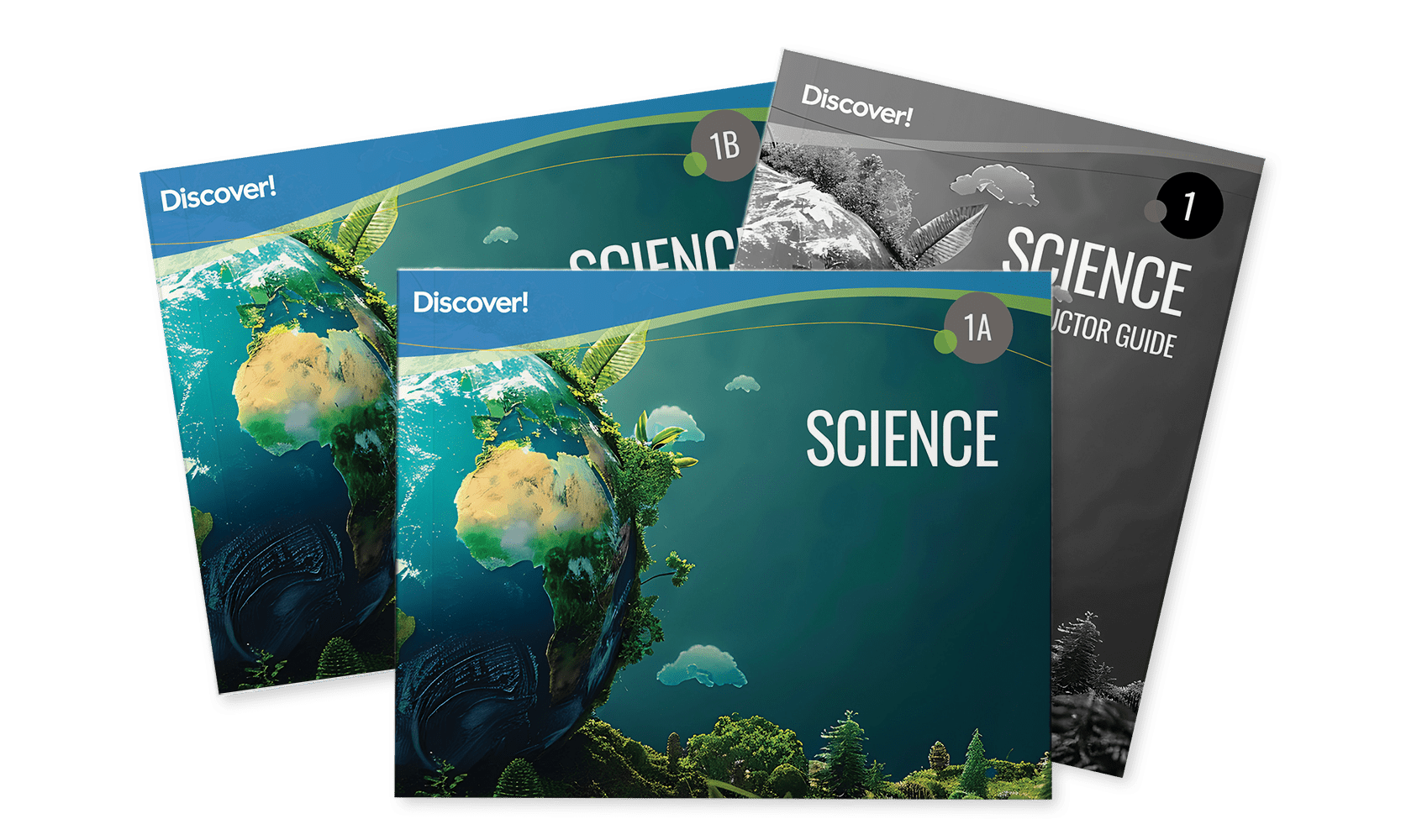
Discover! Science 1 introduces young learners to the wonders of the scientific method, animal characteristics, seasons, weather, and the basics of light, sound, and heat energy. Engaging worktexts feature fun activities and lessons tailored to all learning styles. The instructor guide simplifies teaching with helpful suggestions, answer keys, and assessments for a seamless learning experience.
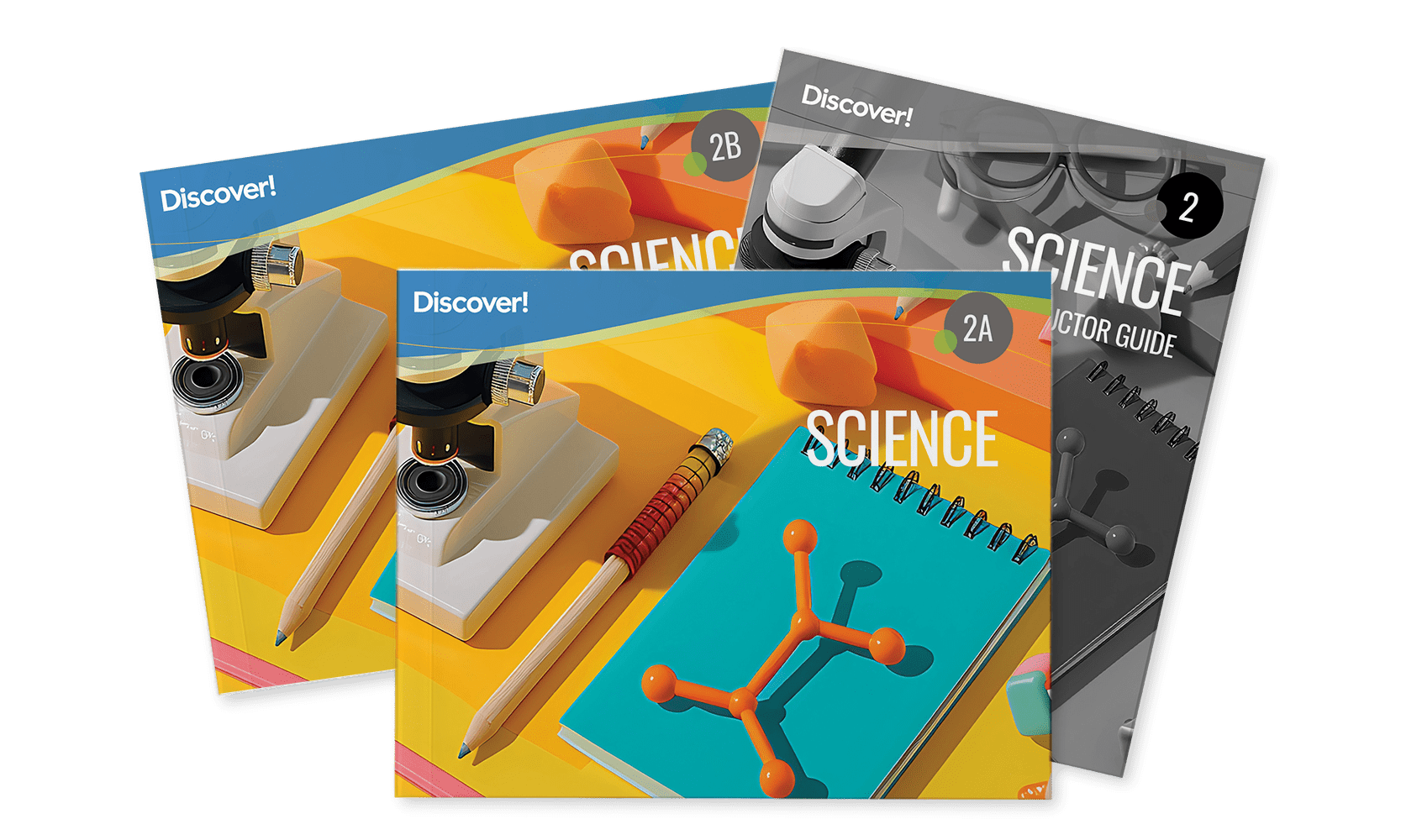
In Discover! Science 2, students explore the properties of matter, forces in motion, the solar system, and Earth’s ever-changing landscapes. They’ll also learn about natural resources, plant and animal habitats, and the human body. Worktexts include interactive activities and lessons for all learning styles, while the instructor guide provides easy-to-follow support with answer keys and assessments to enhance teaching.
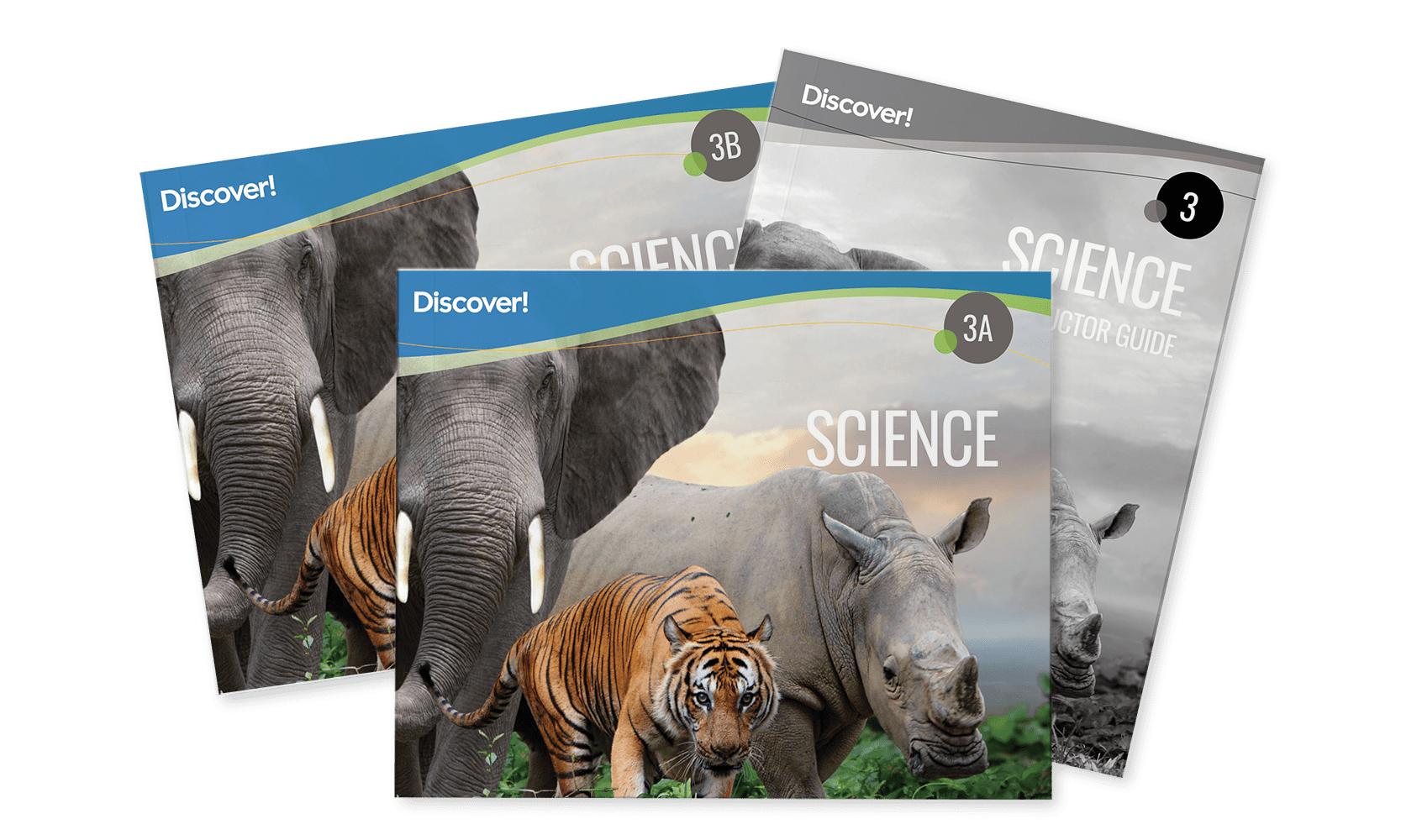
Discover! Science 3 takes students on an exciting journey through the animal kingdom, exploring behaviors, adaptations, and ecosystems. They’ll also dive into the world of plants, matter, sound, energy, motion, weather, and the digestive system. Engaging worktexts feature hands-on activities designed for all learning styles, while the instructor guide provides easy-to-follow suggestions, answer keys, and assessments to simplify teaching.
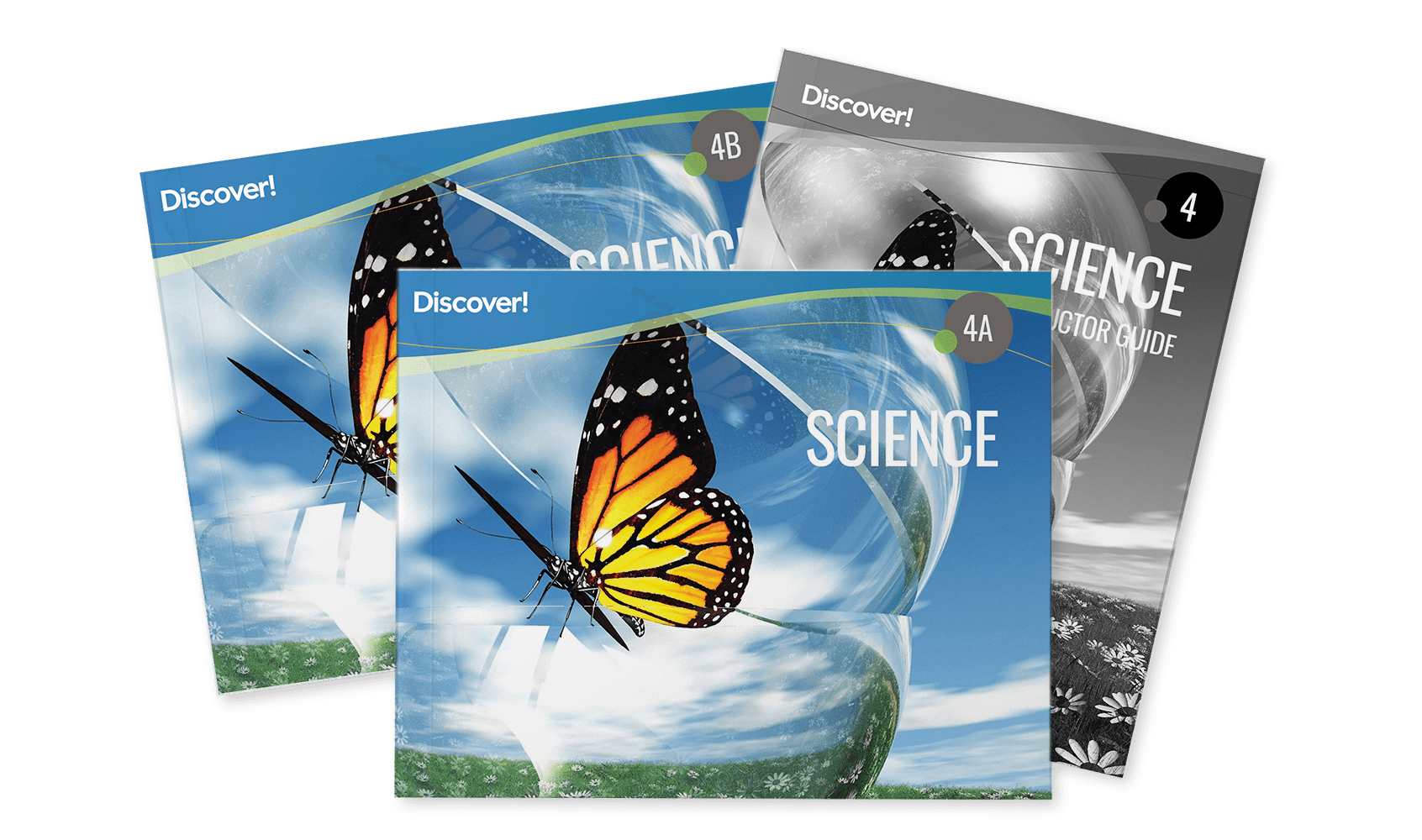
In Discover! Science 4, students uncover the wonders of ecosystems, insects, plant life, electricity, magnetism, and the moon’s influence on tides. They’ll also explore Earth’s changing landscapes, natural resources, and the respiratory and circulatory systems. Worktexts include interactive activities for all learning styles, while the instructor guide provides structured support with lesson suggestions, answer keys, and assessments.
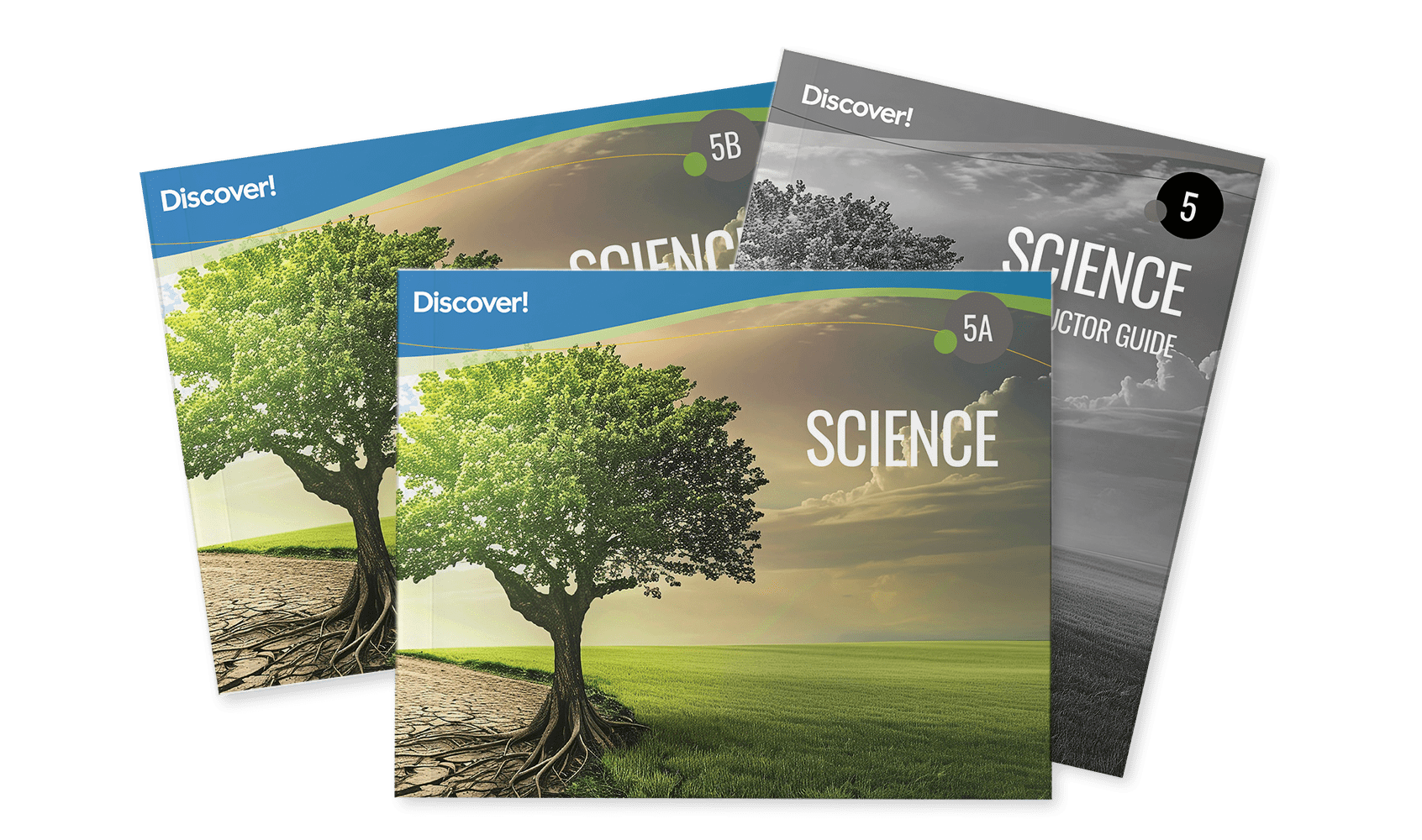
Discover! Science 5 sparks curiosity with engaging lessons on matter, energy, the solar system, weather patterns, biomes, and ecosystems. Students also explore sound and gain a deeper understanding of the immune and nervous systems. Worktexts are packed with activities to support every learning style, while the instructor guide simplifies teaching with clear suggestions, answer keys, and assessments.
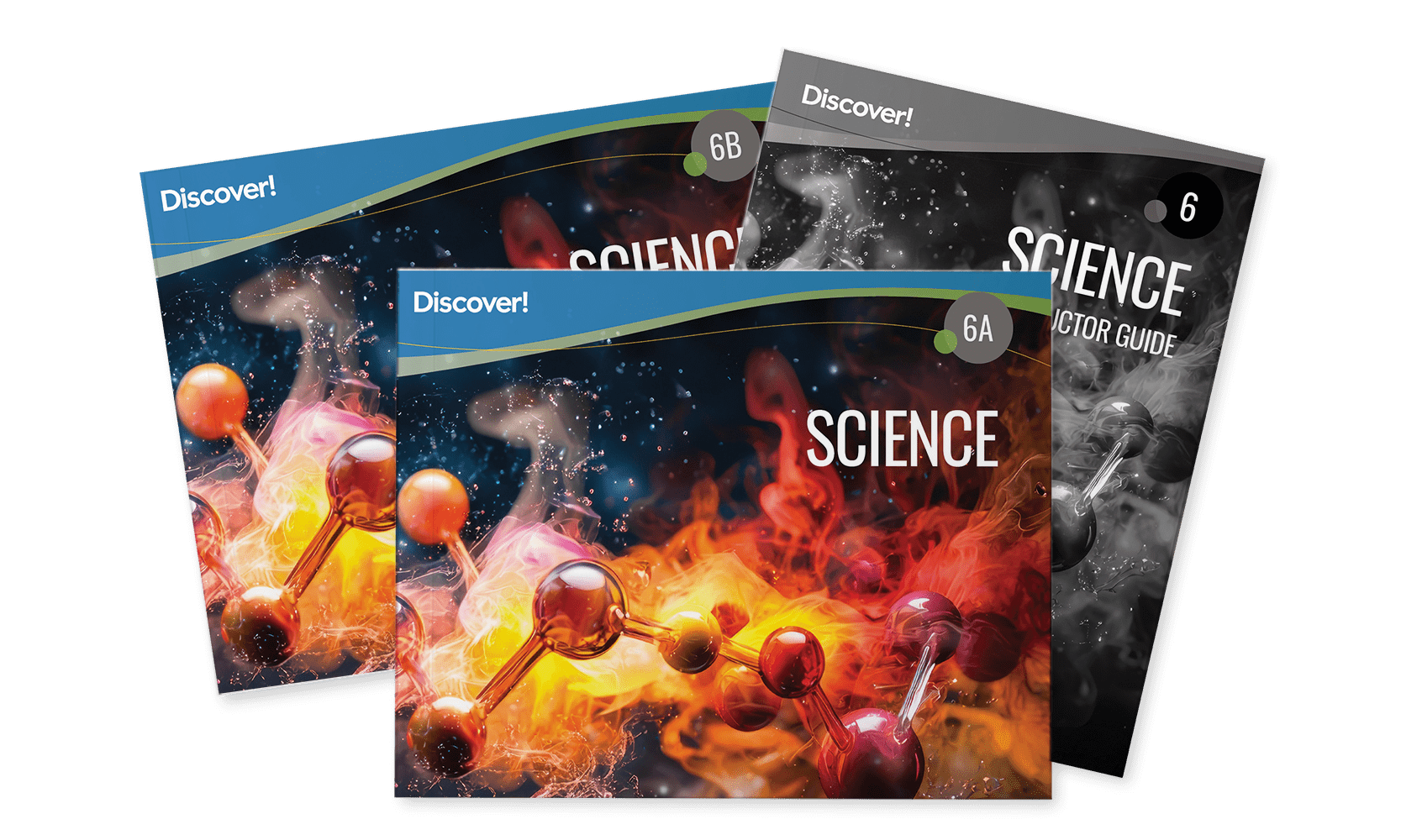
In Discover! Science 6, students explore the fundamentals of life science, from cell structures and genetics to bacteria, viruses, protists, and fungi. They’ll also study plants, animal anatomy, reproduction, and major body systems, including the skeletal and muscular systems. Worktexts offer interactive lessons for all learning styles, while the instructor guide provides step-by-step support, answer keys, and assessments to make teaching effortless.
Discover! Science 7 invites students to explore the natural world, from the tiniest atoms to the vast universe. Engaging worktexts include hands-on activities, mini-labs, and lessons on scientific measurement, human body systems, planetary science, and Earth’s natural processes. A comprehensive instructor guide, lab book, and assessment booklet provide step-by-step support, experiments, and evaluations, making science both exciting and accessible for all learning styles.
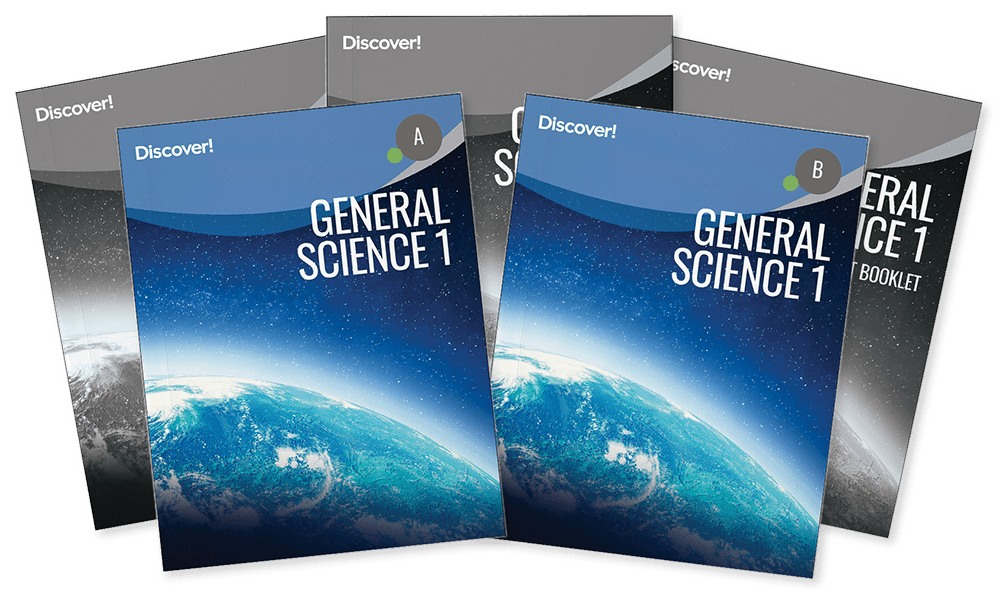
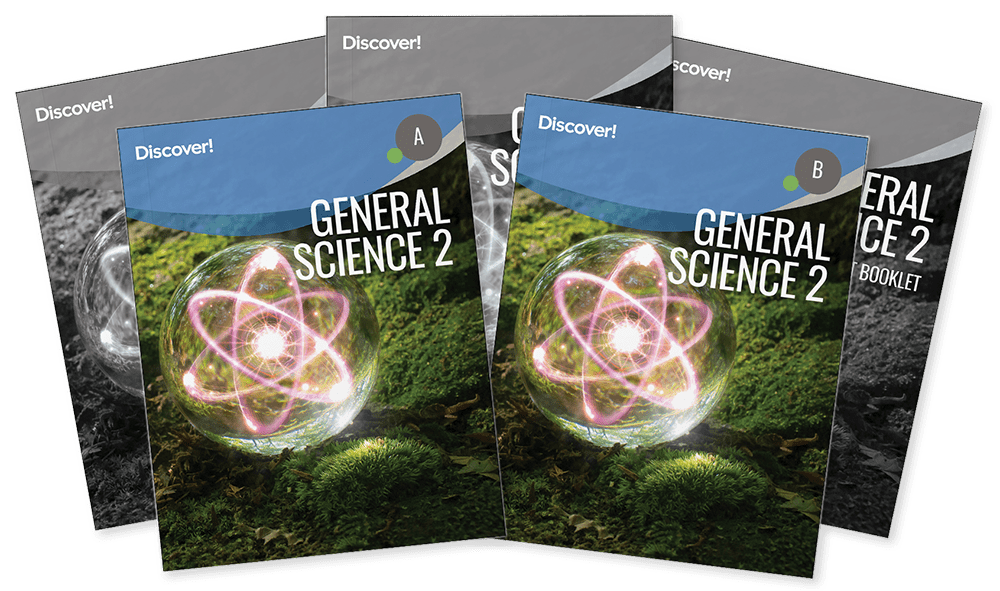
Discover! Science 8 immerses students in the fascinating world of life sciences, matter, energy, force, and geology. Engaging worktexts feature hands-on activities, mini-labs, and lessons on nature’s balance, electromagnetism, and simple machines. A comprehensive instructor guide, lab book, and assessment booklet provide structured support, experiments, and evaluations, making science exploration interactive and accessible for all learners.
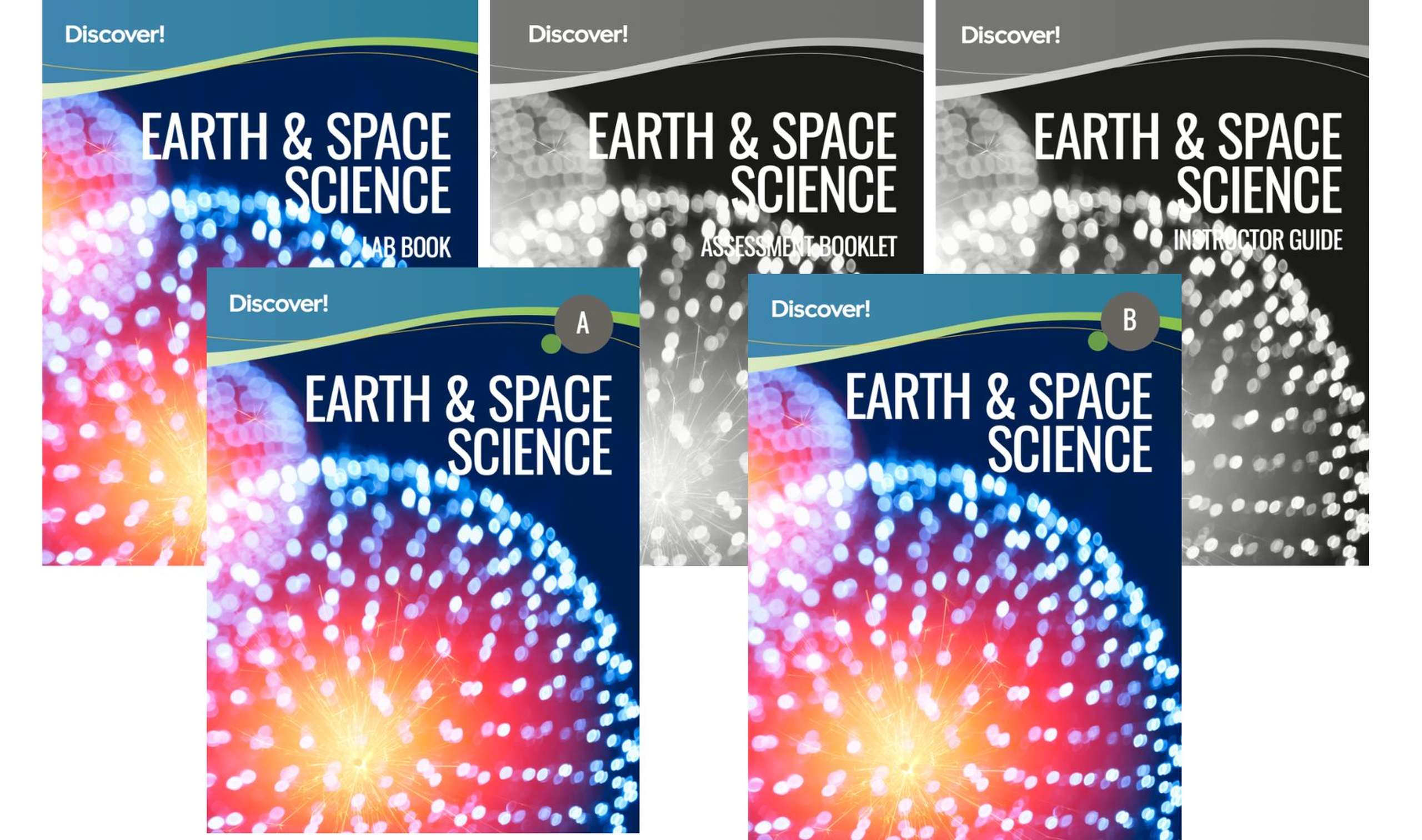
Discover! Earth & Space Science immerses students in exploration of our dynamic planet and the vast universe beyond it. Learners begin with the elements of planetary systems, studying the Sun, stars, constellations, and Earth’s Moon, including phases and eclipses. The course journeys outward to the outer planets, asteroids, and comets, then returns to Earth to investigate the atmosphere, water cycle, and natural cycles that shape life. Students examine weather patterns and forecasting, regional and global climates, and how human activities impact climate and pollution. Hands-on investigations reveal marine geology, ocean currents, plate tectonics, and Earth’s powerful extremes—deserts, ice ages, glaciers, volcanoes, and earthquakes. The course also uncovers Earth’s internal structure and the ongoing processes of the lithosphere. A Career Spotlight introduces exciting STEM pathways showing how science helps solve real-world challenges, including Astronomer, Meteorologist, Geophysicist, Ocean Engineer, and Engineers across aeronautical, chemical, electrical, and geotechnical fields.
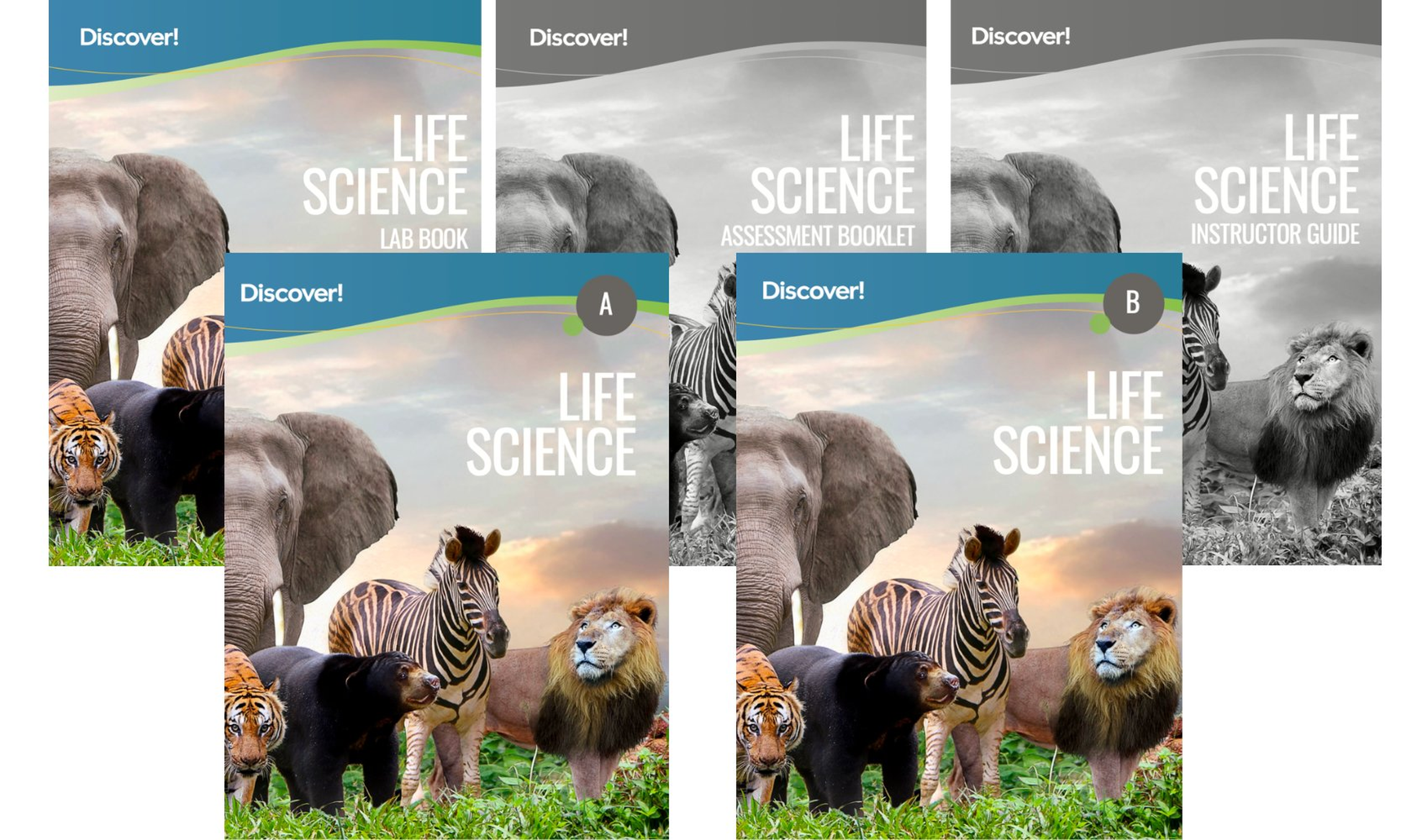
Discover! Life Science immerses students to the incredible diversity of living things and the systems that sustain life. The course begins with classifying organisms, from microscopic microbes to complex plants and animals. Students explore vascular and non-vascular plants, seeded and non-seeded plants, and the natural life cycles that support ecosystems. Key biological processes such as photosynthesis and the Calvin Cycle are examined to show how energy flows through living systems. Learners investigate genetics, DNA structure, and modern biotechnological advances that are transforming science and medicine. The course also focuses on the human body, exploring major body systems, how they work together, and what happens when systems fail. Topics in human health, disease prevention, and medical innovation help students connect biology to everyday life. A Career Spotlight highlights exciting pathways including Genetic Engineer, Biomedical Engineer, Epidemiologist, Agricultural Engineer, and Software Engineer, inspiring students to see how life science drives innovation and improves human health.
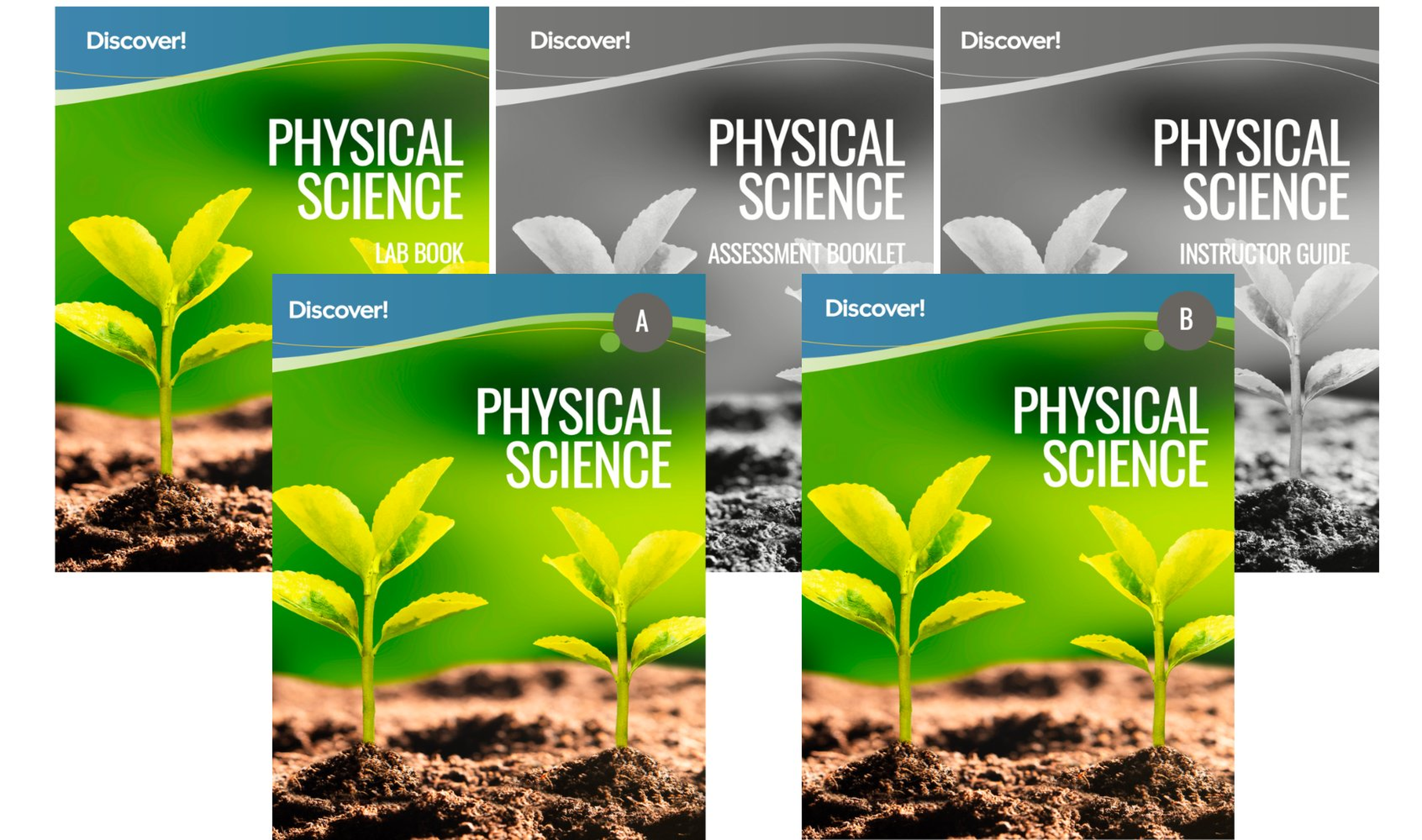
Discover! Physical Science immerses students in how matter and energy interact in the world around us to build a strong foundation. Students begin by mastering the metric system, measurement, area, volume, mass, density, and graphing skills used by scientists and engineers. The course explores states of matter, atomic structure, and the Periodic Table, followed by investigations into chemical and physical changes, compounds, and mixtures. Learners study energy in many forms, including waves, thermodynamics, electricity, and magnetism, with a look toward the future of energy technologies. Core physics concepts such as force, work, motion, and energy are reinforced through hands-on problem solving. Simple machines—levers, wheels and axles, pulleys, inclined planes, screws, and friction—show how basic principles power everyday tools and structures. A Career Spotlight introduces careers such as Physicist, Mechanical Engineer, Civil Engineer, Nuclear Engineer, Electromagnetic Systems Designer, and Construction Engineer, helping students connect physical science concepts to real-world innovation and engineering solutions.
Science Curriculum Samples
Discover! Science 1 introduces young learners to the scientific method, seasons, weather, animal traits, and basic energy concepts through engaging activities and guided lessons.
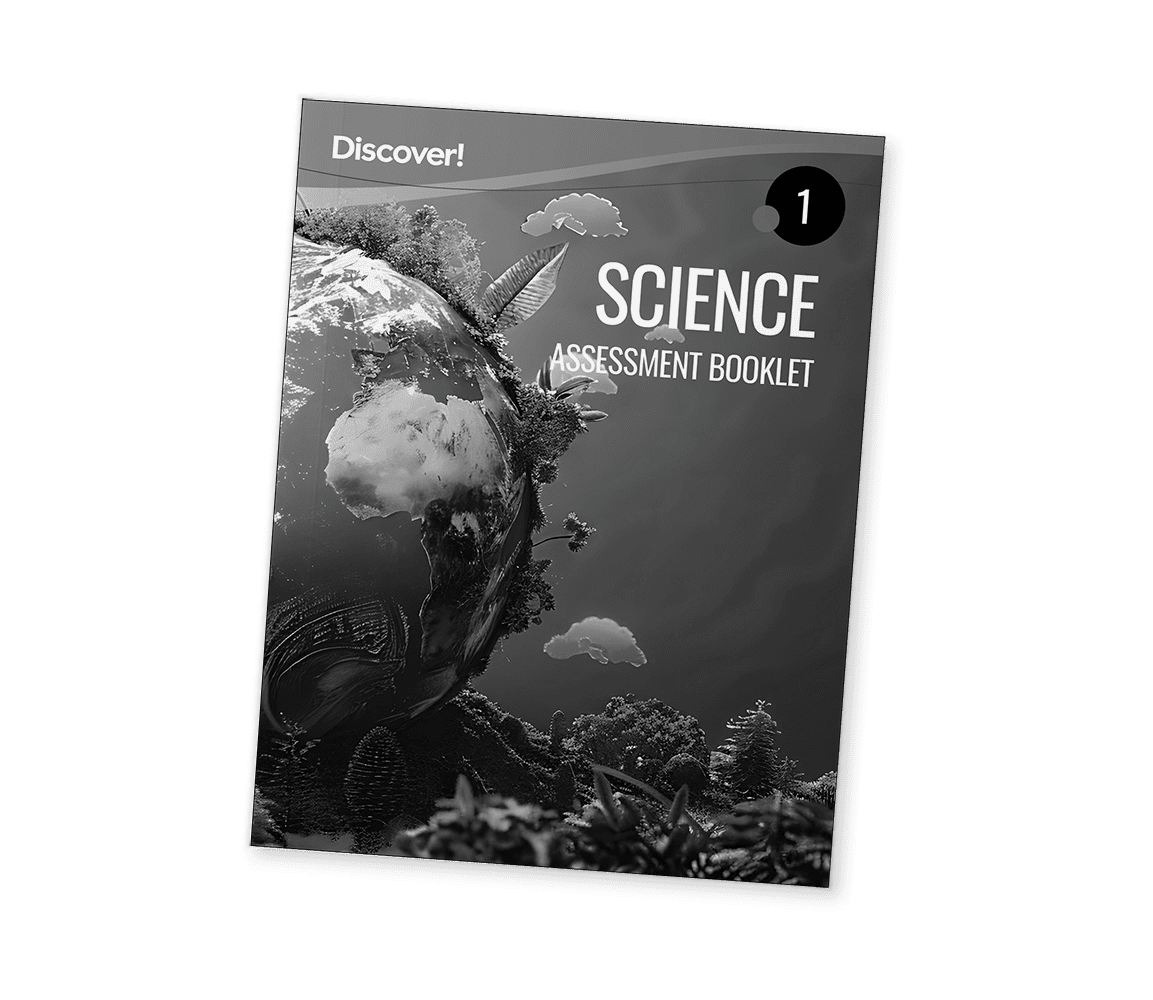
Discover! Science 2 explores matter, forces in motion, the solar system, ecosystems, and the human body with interactive worktexts and structured instructor support.
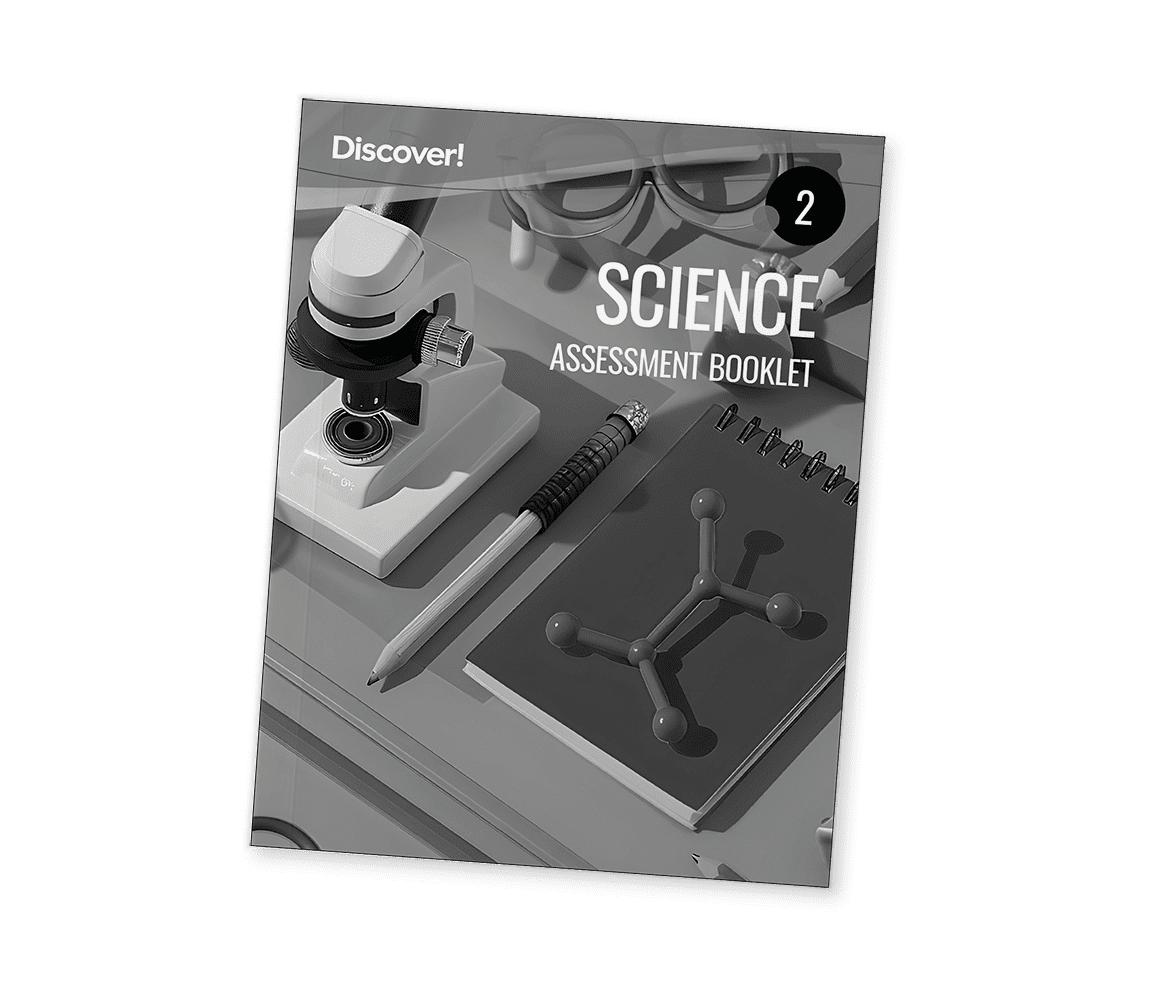
Discover! Science 3 takes students on a journey through animal behaviors, ecosystems, plants, weather, and energy, with hands-on activities and guided instruction.

Discover! Science 4 covers ecosystems, plant life, electricity, magnetism, the moon’s influence, and human body systems through interactive lessons and structured teaching support.
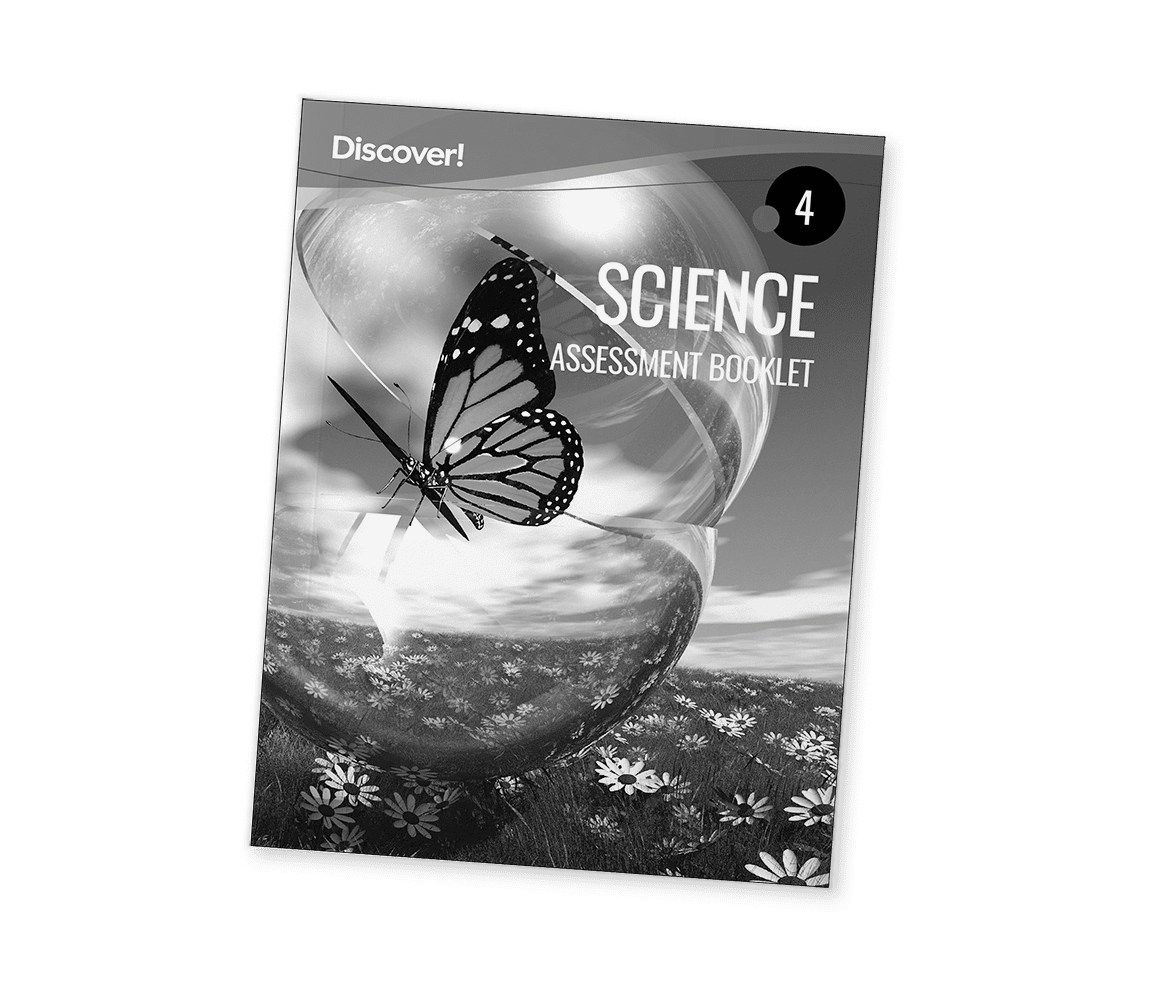
Discover! Science 5 sparks curiosity with lessons on matter, energy, weather, biomes, and the immune and nervous systems, using engaging worktexts and guided assessments.

Discover! Science 6 explores life science topics like cell structures, genetics, bacteria, and body systems with interactive lessons and step-by-step instructor support.

Discover! Science 7 delves into atoms, planetary science, human body systems, and Earth’s natural processes, supported by hands-on activities, lab experiments, and guided instruction.
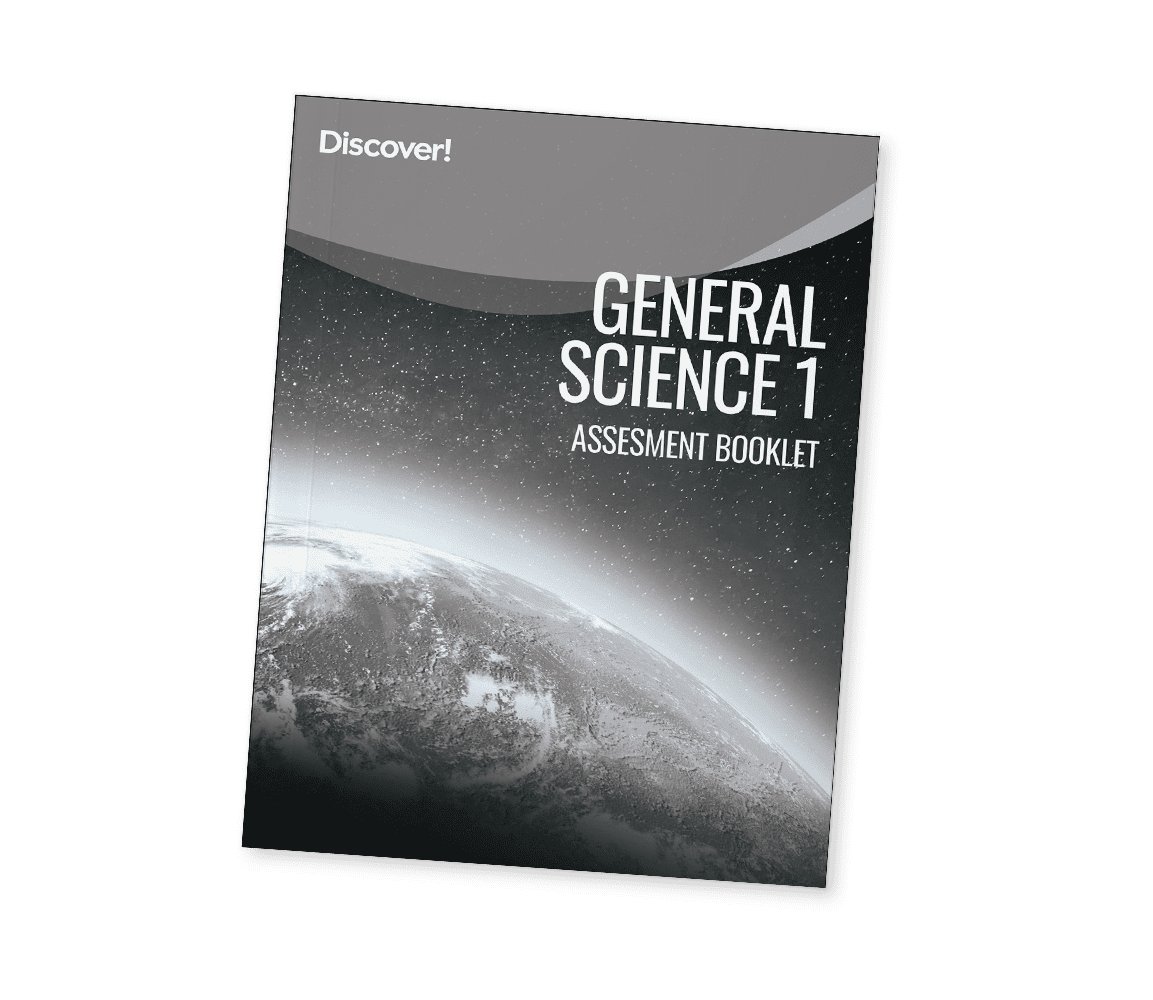
Discover! Science 8 immerses students in life sciences, matter, energy, force, and geology, using interactive lessons, mini-labs, and structured experiments for deeper exploration.
Discover! Earth & Space Science immerses students in exploration of our dynamic planet and the vast universe beyond it. Learners begin with the elements of planetary systems, studying the Sun, stars, constellations, and Earth’s Moon, including phases and eclipses
Discover! Life Science immerses students to the incredible diversity of living things and the systems that sustain life. The course begins with classifying organisms, from microscopic microbes to complex plants and animals. Students explore vascular and non-vascular plants, seeded and non-seeded plants, and the natural life cycles that support ecosystems.
Discover! Physical Science immerses students in how matter and energy interact in the world around us to build a strong foundation. Students begin by mastering the metric system, measurement, area, volume, mass, density, and graphing skills used by scientists and engineers.